
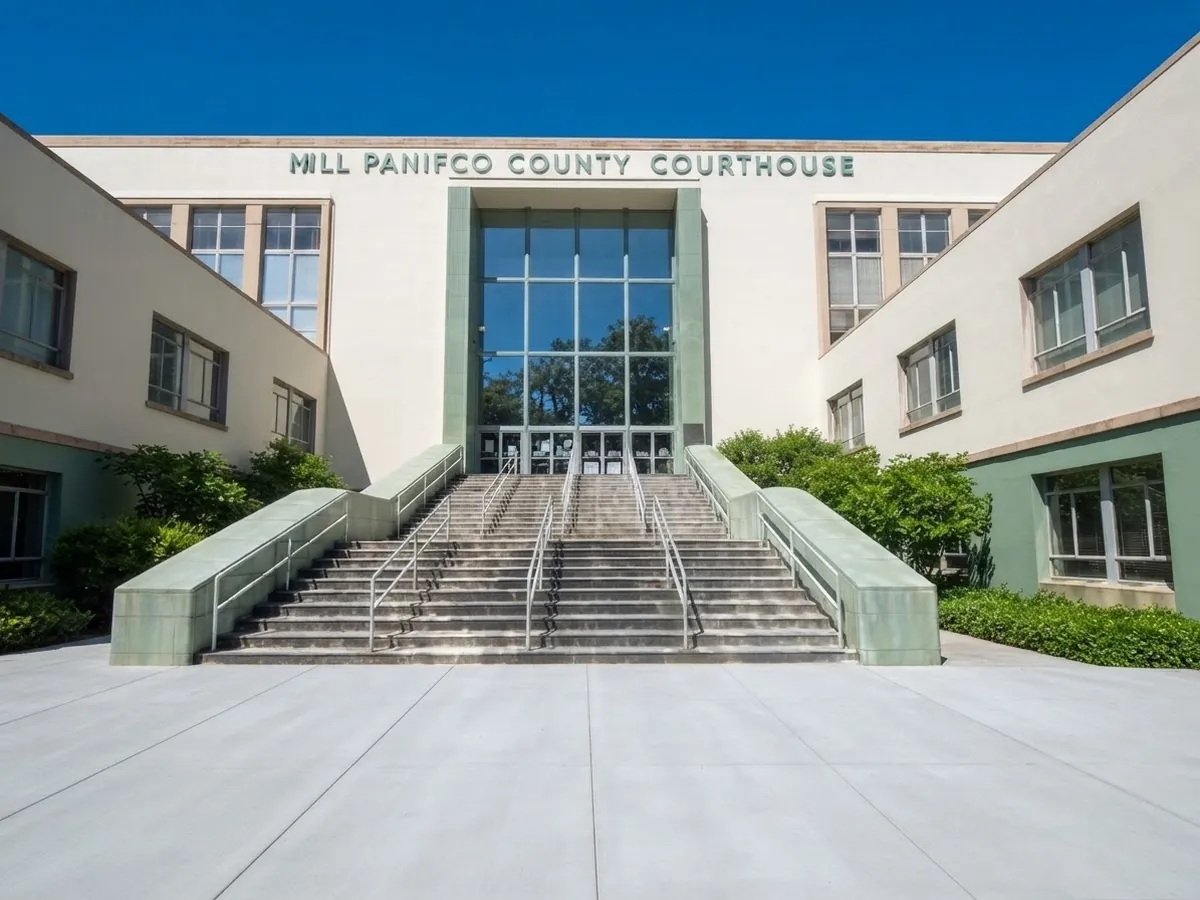
Court records of Mendocino County, California, are maintained by the office of the Superior Court of the county and are accessible through online tools, official court portals, and directly at the court clerk's office. MendocinoCourt.us will help you find publicly available information about court records in this county. Additionally, you can use the re:SearchCA portal, call the court clerk's office, or visit the office in person. The state of California also provides a range of state resources for searching criminal records and inmate information.
Mendocino Court System Overview
Mendocino County is served by the Superior Court of California, County of Mendocino — the only trial court of general jurisdiction in the county. In California, there are no separate district and magistrate courts in the traditional sense: the Superior Court handles all categories of cases. The court has two main branches — in the city of Ukiah and in Ten Mile (formerly Fort Bragg). Appeals from this court go to the First District Court of Appeal, located in San Francisco. At the federal level, the county falls under the Northern District of California.
The main courthouse is located in Ukiah:
Courts Serving Mendocino
Residents of the county have access to the following courts:
| Court | Address | Phone |
|---|---|---|
| Mendocino County Superior Court — Ukiah Courthouse | 100 North State Street, Ukiah, CA 95482 | (707) 463-4664 |
| Mendocino County Superior Court — Ten Mile Branch | 700 South Franklin Street, Fort Bragg, CA 95437 | (707) 463-4664 |
| U.S. District Court, Northern District of California (San Francisco) | 450 Golden Gate Avenue, San Francisco, CA 94102 | (415) 522-2000 |
| U.S. Bankruptcy Court, Northern District of California | 450 Golden Gate Avenue, San Francisco, CA 94102 | (415) 268-2300 |
Separate municipal courts in California have not existed since 1998 — they have all been merged with the Superior Court.
What Types of Cases Mendocino Courts Hear
The Superior Court of Mendocino County hears virtually all categories of cases that arise at the state level:
- Criminal cases — felonies, misdemeanors, infractions
- Civil lawsuits — from small claims to large commercial disputes
- Family law — divorce, custody, alimony, protective orders
- Probate cases — inheritance, guardianship, conservatorship
- Juvenile cases — offenses, child protection, adoption
- Traffic violations and DUI
The federal court of the Northern District of California hears federal criminal and civil cases, as well as bankruptcies.
District Court Cases in Mendocino
In the California system, the term "district court" is not used at the state level. Instead, the Superior Court is a court of unlimited jurisdiction. It handles felonies from initial charge to sentencing, civil cases with claims over $25,000, appeals from the small claims division, and all other cases that exceed limited jurisdiction. Cases are distributed among judges according to the court's internal rules. The Presiding Judge is responsible for overall administration and assignment of cases to specific judges.
Magistrate Court Cases in Mendocino
California does not have a separate magistrate tier. Limited jurisdiction cases in the Superior Court include:
- Misdemeanors and infractions, including traffic
- Civil claims up to $25,000
- Small claims — up to $10,000 for individuals and up to $5,000 for legal entities
- DUI cases — from initial hearing to sentencing
- Preliminary hearings in felony cases
These cases are often handled in an expedited manner. A judge may handle multiple categories simultaneously, depending on the workload of the specific court branch.
Family Law, Probate, and Juvenile Matters in Mendocino
Family Law. Divorce, custody and visitation arrangements, child and spousal support, protective orders from domestic violence, paternity establishment — all are handled by the family division of the Superior Court. To file an application, you can use local court forms.
Probate Cases. The court handles cases of inheritance distribution, appointment of guardians for minors, conservatorship for adults who cannot care for themselves, and trust disputes. These cases are usually handled by a specially designated judge.
Juvenile Matters. Proceedings involving juveniles — offenses, child protection cases (dependency), adoptions — are confidential. Access to materials is restricted by law. For inquiries regarding juvenile cases, contact the court clerk's office directly at (707) 463-4664.
How Cases Move Through the Mendocino Court System
- Case Initiation. A criminal case begins with the filing of a complaint by the prosecutor. A civil case starts with a complaint or petition filed by the plaintiff.
- Judge Assignment. The clerk's office assigns the case to a specific judge according to the court's internal rules.
- First Hearing. In criminal cases, this is an arraignment — the defendant is informed of the charges and bail is set. In civil cases, it is a case management conference.
- Pretrial Phase. Parties exchange evidence (discovery), file motions. In criminal cases, plea bargaining may occur.
- Trial. The case concludes with a trial, settlement, plea, or default judgment.
- Post-Judgment. Criminal cases — sentencing and the possibility of appeal. Civil cases — enforcement of judgment or appeal to the Court of Appeal.
Court Administration, Local Rules, and Public Access in Mendocino
Court administration is carried out by the Presiding Judge in conjunction with the Court Executive Officer. These individuals are responsible for resource allocation, case assignments, and the daily operation of both branches.
Local court rules are published on the official website and regulate the filing of documents, deadlines, formats of applications, and other procedural requirements specific to Mendocino County.
Regarding public access — most court records in California are open to the public according to the California Rules of Court and public access policy of the judicial branch. Exceptions include juvenile cases, sealed records, certain family cases, and materials protected by court order. Requests for public records can be submitted through the California Public Records Act.
Hearings are open for in-person attendance. The court also uses remote hearings in certain categories of cases — check the availability of this option when contacting the clerk's office.
Court Records and Related Court Resources in Mendocino
- Online Case Search. The re:SearchCA portal allows you to view case information, parties, scheduled hearings, and some filed documents. You can also purchase and download document copies through it.
- Online Court Portal. Court Case Information — the central page for accessing case information, paying fines, and confirming corrections of violations.
- Clerk-Recorder Document Search. Mendocino County Clerk-Recorder maintains a separate registry of records — property deeds, mortgages, other registered documents.
- Court Records Request. To obtain copies not available online, use the MMC-900 form. Checks are made payable to Mendocino County Superior Court.
- Criminal History. To obtain a copy of your own criminal record, you need to submit fingerprints and pay $25 through the California DOJ. Fingerprinting services are available, among others, at the Mendocino County Sheriff's Department at 951 Low Gap Road, Ukiah.
- Inmate Search. California Incarcerated Records & Information Search (CIRIS) — a tool for searching individuals under the supervision of the CDCR.
- Divorce Records. California Department of Public Health – Vital Records maintains divorce records only for the years 1962–1984. More recent records should be requested from the Superior Court of the county where the judgment was issued.
- Booking Log. Fort Bragg Police publishes a booking log on their website.
- California Court System in General. General information about the structure of the state's courts can be found on the California Courts portal.
For additional assistance in finding public records of the county, use MendocinoCourt.us.